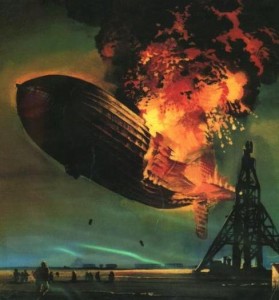
On May 6, 1937, the golden age of airship travel comes to an end. During a landing in severe thunderstorms at the Lakehurst Naval Air Station in New Jersey, the Hindenburg bursts into flames and crashes. The tragedy brought an end to the popularity of Zeppelin airship travel and the common use of hydrogen as fuel. Hydrogen is now making a comeback as a component for cell phone towers, forklifts and even aircraft tugs.
Hindenburg Facts
At 803.8 feet in length and 135.1 feet in diameter, the German passenger airship Hindenburg (LZ-129) was the largest aircraft ever to fly. The commercial flights of Hindenburg, along with Graf Zeppelin, pioneered the first transatlantic air service. She carried hundreds of passengers and traveled thousands of miles before being destroyed in a tragic fire on May 6, 1937 at NAS Lakehurst. Please join us for a trip through Hindenburg’s history: