-
Alfred Nobel: The Founder of the Peace Prize
Alfred Bernhardt Nobel was an inventor and the person who established the Nobel Peace Prize. He set the criteria as “the person who shall have done the most or the best work for fraternity between nations, for the abolition or reduction of standing armies and for the holding and promotion of peace congresses.” The first recipients awarded the Nobel in 1901 were German, Wilhelm Conrad von Röntgen, Jakobus Hendricus van t’Hoff and the German Nobel Laureate in Medicine, Emil Adolf von Behring and the French minister, who received the Nobel Prize in Literature, the poet, Sully Prudhomme.
You May Also Like

Brooklyn Bridge History: The first crossing of the East River
-
When was the World Wide Web Born?
First off, there is a distinction to be made between the internet and the World Wide Web. The internet has been around since the 1960s, though the average person wasn’t aware of its existence. Those utilizing its power back then were a few select professionals working in government and research. When the World Wide Web came along in 1989, it was the perfect time. It came about after the expansion of all the multitudes of interconnected networks and other infrastructure necessary to lay the foundation. Sir Tim Berners-Lee is responsible for inventing the World Wide Web. He was a British computer scientist. His creation of HTML, HTTP, and URLS opened up the…
-
Oklahoma State Flag 100th Anniversary
The current version of the Oklahoma state flag was first adopted on April 2, 1925. The artist who designed the flag was Louise Fluke. She won a contest hosted by the Oklahoma Society Daughters of the American Revolution. Blue Field: loyalty and devotion Osage Shield: Represents the Native American roots of Oklahoma and is symbolic of defense. Crossed Pipe and Olive Branch: the crossed pipe represents Native American culture, while the Olive Branch is representing European culture. Eagle Feathers: There are seven eagle feathers that symbolize strength and heritage for each of the seven tribes : Choctaw, Chickasaw, Cherokee, Creek, Seminole, Quapaw, and Osage tribes.
-
Habeas Corpus and the Magna Carta
What Does Habeas Corpus Mean?
-
Seven Highest Summits of the World: The Seven Summits Challenge
The Seven Summits Challenge is to reach the highest point on each continent. This audacious goal was first imagined in the 1950s. What are the Seven Highest Summits in the world? Everest (Asia): Everest, which is 8849 meters (29035 feet), is the highest mountain in Asia. Reaching a height of 6961 meters (2238 feet), Aconcagua (South America): Aconcagua stands as the highest mountain outside Asia. Denali (North America): The highest peak is Denali, 6190 meters (20310 feet). Kilimanjaro (Africa): The world’s highest freestanding mountain, Kilimanjaro in Africa, rises 5895 meters (19341 feet) above sea level. Elbrus (Europe): Europe’s highest mountain, Elbrus, stands 5642 meters (18510 feet) above sea level. Vinson…
-
O-Ring failure in Challenger Disaster: A Case of Corruption
The Challenger Space Shuttle disaster occurred on January 28, 1986. The shuttle launch was only 73 seconds in progress, when the Y-shaped explosion occurred. NASA, for the first time in its history, lost its crew members as the world watched on. It began as a state of shock before the horror and grief began to settle in. The failure to stop the Challenger flight went along with the failure to address the engineers’ concerns about the O-Ring. Their concerns were reported long before the catastrophic flight took off. Following the disaster NASA appointed the Roger’s Commission to investigate. Theoretical physicist Dr. Richard Feynman was one of the members. His involvement…
-
Industrial Revolution: A Different Way of Life
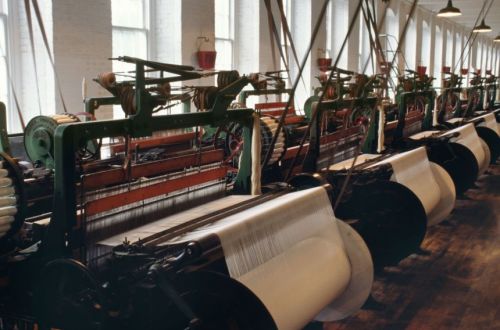
Before the Industrial Revolution, people worked in small-scale businesses. The two primary and predominant examples, are farming and artisan handicrafts. Those social structures had basically remained unchanged, since the Middle Ages. Life was lived in small to medium sized villages. Travel beyond a person’s village was rare. Then, during the middle decades of the 18th century, Britain and other European countries saw a rise in their population. In order to serve this increased number of people, a gradual transformation from villages and small-scale production into a large, mechanized system of higher productivity took place. Read more about this transformative time in history: Source: National Geographic
-
Who Signed the United States Constitution?
These are the 39 delegates who signed the Constitution on September 17, 1787, and the states they represented: Virginia New Hampshire Massachusetts Connecticut New York New Jersey Pennsylvania Delaware Maryland North Carolina South Carolina Georgia Rhode Island, one of the original 13 colonies, did not immediately sign the Constitution of the United States (Text), but did so three years later and became a state in 1790. See United States Constitution.*The streets of Madison, Wisconsin, are named after the signers.
You May Also Like

One Term Presidents Voted Out
-
The Founding Fathers
Who were the Founding Fathers? There were many people who were Founding Fathers. Some scholars like to limit them to a small number, such as seven: George Washington, John Adams, Thomas Jefferson, Benjamin Franklin, Alexander Hamilton, John Jay, and James Madison. https://kids.kiddle.co/Founding_Fathers_of_the_United_States
You May Also Like
One Term Presidents Voted Out
-
Famous Speeches
The Gettysburg Address: The Gettysburg Address John F. Kennedy’s Inaugural Address, January 20, 1961: Ask Not What Your Country Can Do for You “Tear Down this Wall” President Ronald Reagan June 12, 1987. Brandenberg Gate. West Germany: Tear Down This Wall Martin Luther King’s Speech: ‘I Have a Dream’ – The Full Text By The Rev. MARTIN LUTHER KING Jr. Aug. 28, 1963: I Have a Dream